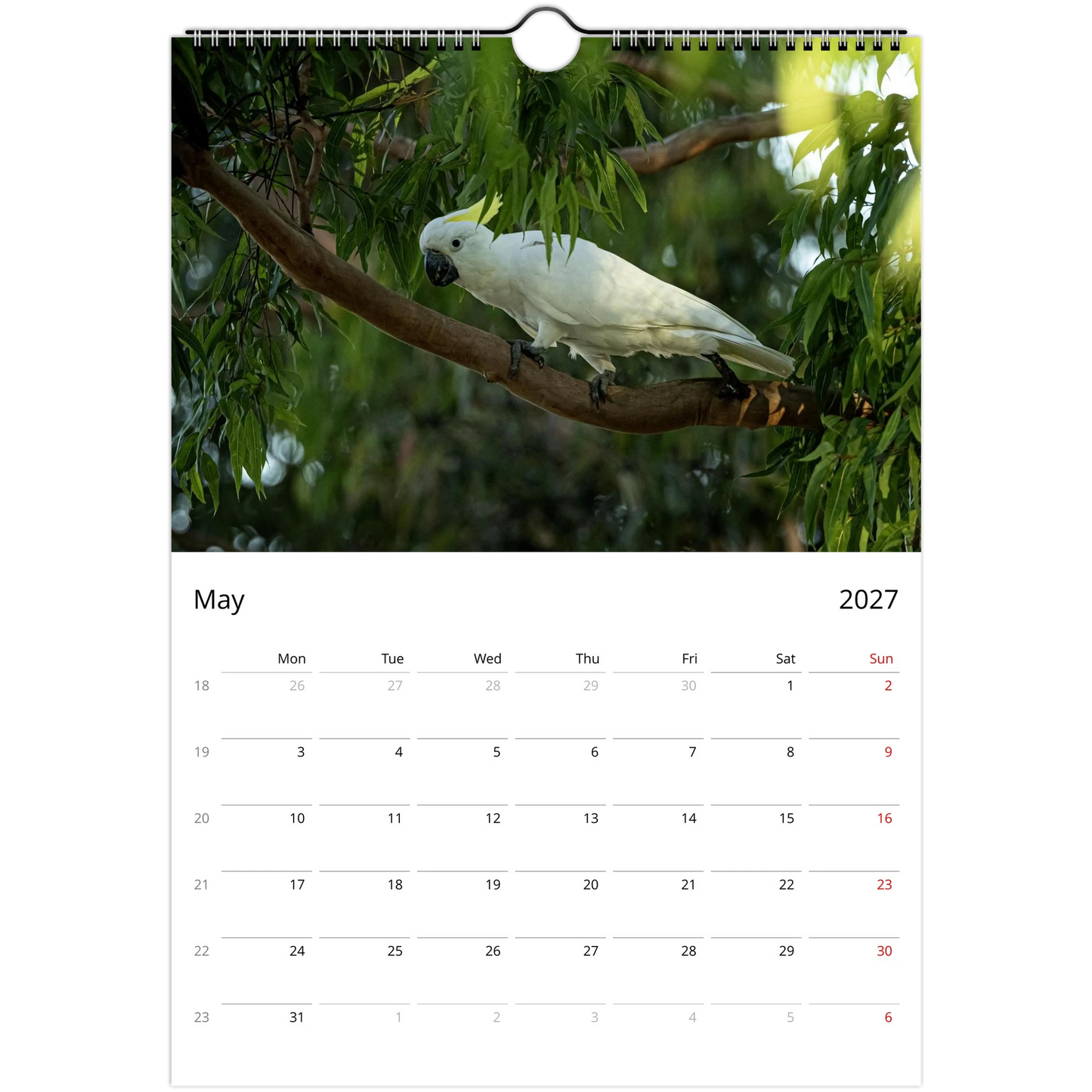
Cockatoo: Australia's Loudest, Most Photogenic Bird
Share
If there's one Australian bird that announces itself before you even see it, it's the cockatoo. That unmistakable screech carries across parks, backyards, and open bushland — and by the time you look up, there's usually a flash of white or a sulphur-yellow crest already lifting off a branch.
Photographing cockatoos taught me patience in a very specific way. They're social, loud, and constantly moving — preening each other, squabbling over position on a branch, or tearing into a gum nut with theatrical enthusiasm. Waiting for the moment when a crest flares up, or a wing catches the light mid-stretch, means a lot of watching and very few "safe" shots.
What I love most is their sheer personality. Cockatoos don't seem to do anything quietly. Whether it's a Sulphur-Crested Cockatoo raising its crest in alarm or curiosity, or a small flock working through a tree canopy together, there's always a sense of drama and comedy running through every frame.
Photographing Cockatoos at Jells Park
I've photographed cockatoos at Jells Park in Wheelers Hill, one of my favourite places in Melbourne for photographing Australian birds. If you're after Jells Park photos of your own, walk the lake loop slowly and listen first — with cockatoos, you'll almost always hear the flock long before you see it. Early morning gives you the softest light on all that white plumage, which is otherwise very easy to overexpose.
I've written more about the park itself, and the other birds I photograph there, in My Favourite Places: Jells Park, Wheelers Hill.
Building a full calendar around cockatoos meant choosing twelve moments that each capture a different side of that personality — the mischief, the noise, the surprising tenderness between mates, the sheer visual punch of white feathers against blue sky.
The Cockatoos Wall Calendar is personalised to order, available in multiple sizes, and makes an easy, joyful gift for anyone who already has a soft spot for Australia's rowdiest bird.