Ducks at Jells Park: Wood Ducks, Pacific Black Ducks and a Quiet Morning by the Lake
Every bird at Jells Park has its moment. The black swans glide, the ibises shout from their island, the purple swamphens strut across the grass. And then there are the ducks, which are simply everywhere: on the lake, on the lawns, on the path in front of you, completely unbothered.
Most people walk straight past them. I don't. The ducks are often the first birds I photograph on a morning lap of the lake, and they are some of the most rewarding, because they let you get close, they stay put, and the closer you look, the more there is to see.

The Australian Wood Duck: The Duck That Prefers the Lawn
If you see a duck at Jells Park that isn't in the water, it's probably an Australian wood duck. They are grazers. Instead of dabbling for food like most ducks, they walk the lawns near the lake and nibble the grass, a bit like tiny geese. On a quiet morning you will find pairs and small groups spread across the green, heads down, working their way slowly towards the water.
They are also called maned ducks, and once you look at the male you can see why. He has a dark chocolate-brown head with a short black mane down the back of his neck, a speckled chest and a soft grey body with black stripes along the wings. The female is browner and more speckled all over, with two pale stripes on her face, one above the eye and one below. Side by side, as in the photo above, they are easy to tell apart.
Ducks in the Trees
The thing that surprises most people is that wood ducks are happy up off the ground. They perch on branches and fallen logs, and they nest in tree hollows, sometimes well above the ground. When the ducklings hatch, they leave the nest by jumping out of the hollow, and their parents lead them to water on foot.

The Ducklings
Once they reach the water, the young wood ducks stick together. Some mornings a whole group of them crosses the lake in a tight bunch, all heading the same way, with the light bouncing off the ripples around them and turning the water silver and green. It's one of my favourite things to photograph at Jells Park: a scene that only lasts a few seconds, and never looks the same twice.

The Pacific Black Duck: The Classic Dabbler
The Pacific black duck is the one most people picture when they think of a duck on a lake. It feeds in the shallows, tipping forward with its head under the water and its tail in the air, or wading slowly along the edge with its bill skimming the surface.
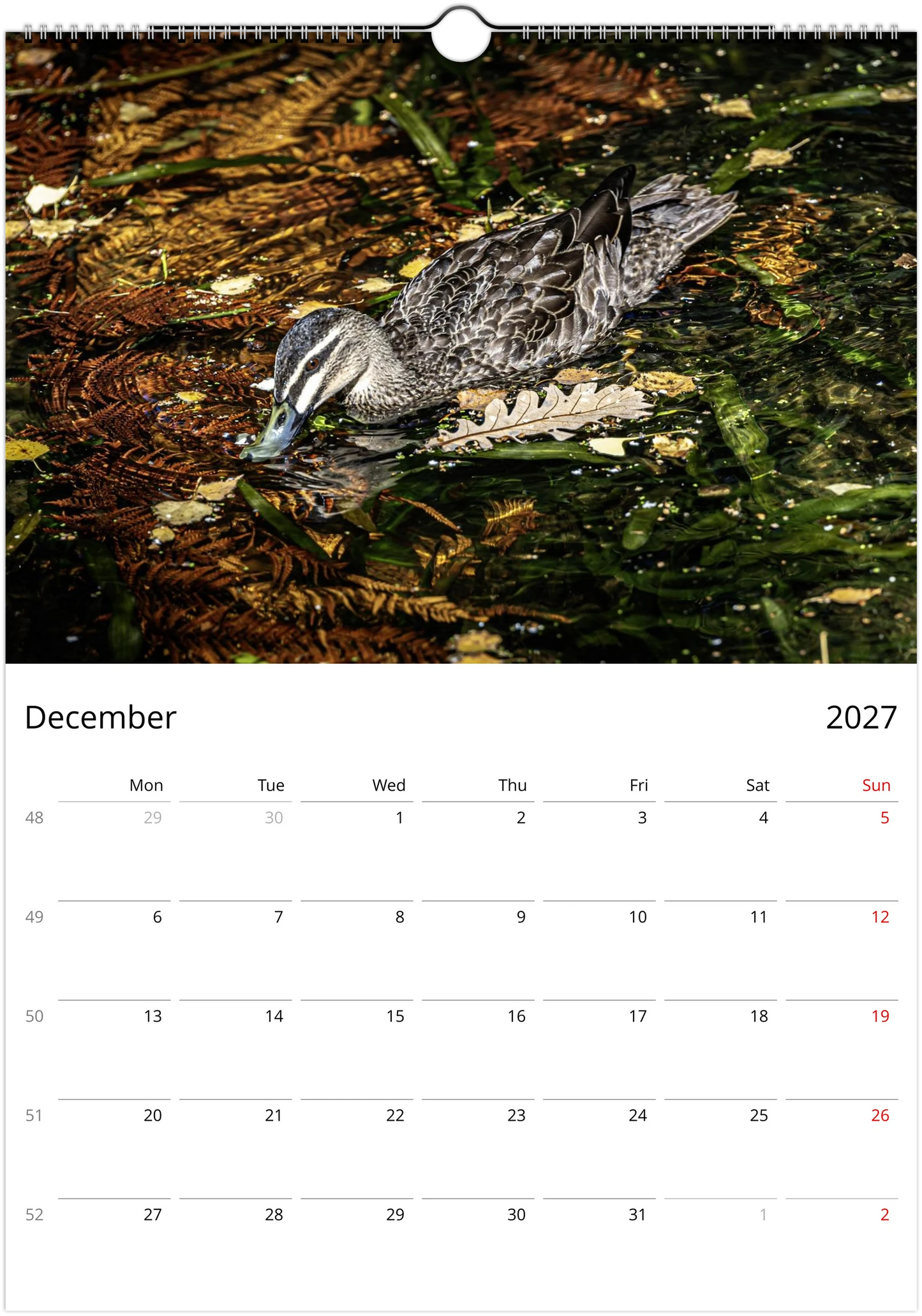
From a distance it looks plain brown. Up close it is anything but. The feathers are finely scalloped in brown and cream, the face has a dark stripe through the eye with pale stripes above and below it, and when the wing opens there is a flash of iridescent green. That green patch is what I wait for. It only shows for a moment, and in soft morning light it almost glows.

Every now and then a teal joins them on the lake too: smaller, quicker and easy to miss if you are not paying attention.
How I Photograph the Ducks at Jells Park
- Come early. Around sunrise the ducks are feeding, which means they are busy and stay in one place. The light is soft, too.
- Get low. A duck photographed from standing height looks like a duck on the ground. At eye level, with the grass or the water blurred in front and behind, it becomes a portrait.
- Move slowly. The wood ducks on the lawns will tolerate you if you take your time. Stop, wait, then move a few steps closer.
- Watch the wings. For Pacific black ducks, the green wing patch is the shot. Be ready when one stretches, preens or shakes off water.
A Year of Ducks on Your Wall
Many of my favourite duck photos from these walks are in my 2027 Ducks Wall Calendar: twelve months of wood ducks, Pacific black ducks and the quiet lakes they live on. Like all my calendars, you can personalise it with your own start month, first day of the week and language, which makes it an easy gift for a birdwatcher or anyone who stops to look at the ducks.
If you love waterbirds, have a look at the rest of my bird calendars too, including the Black Swans, Pelicans, Eurasian Coots and Purple Swamphens calendars, all photographed at Jells Park.
Visiting Jells Park
Jells Park is in Wheelers Hill in Melbourne's south-east, entry is free and the park is open all year. For the lap around the lake, come in from Jells Road: the entrance leads straight to the car park that is the best starting point for the lake path. The ducks are there all year round, and the walk takes under an hour if you don't stop. With a camera, I never manage that.
For more of the park, its birds and the walk around the lake, see my Jells Park photos page.