Melbourne Zoo's Butterfly House: Photographing a Tropical Paradise
Share
Step through the doors of the Butterfly House at Melbourne Zoo and you leave Melbourne behind. The air is warm and heavy, tropical plants surround you, and everywhere you look, butterflies drift past in flashes of colour.
It's one of my favourite places in the zoo, and one of the most challenging places I've ever photographed.
A Tropical Paradise Since 1985
The Butterfly House opened in 1985 and celebrated its 40th birthday in December 2025 (Zoos Victoria). It's kept warm and humid all year, at around 26–28°C, so tropical butterflies can thrive even in a Melbourne winter.
Most of the butterflies are tropical species from North Queensland and the Northern Territory — butterflies you'd normally never see in Victoria. Around 600 butterflies of 10 to 15 species fly at any time. The largest is the spectacular Cairns Birdwing, and you might also spot Red and Orange Lacewings, the tiny Chocolate Argus with its orange spots, and Common Grass Yellows (Zoos Victoria).
Every butterfly you see was bred at the zoo. Eggs are collected from the host plants, raised behind the scenes, and dozens of new butterflies are released into the house every day.
The Challenge of Photographing Butterflies
The Butterfly House is beautiful, but it doesn't make photography easy.
The foggy lens. The moment you walk in from the cool Melbourne air, the warm, humid air hits your cold camera and the lens fogs up completely. Wiping it only smears it. The only real fix is patience: wait a few minutes for the camera to warm up and the glass to clear. On a cold day, I keep my camera inside my jacket on the way in to help it adjust faster.
Two kinds of butterflies. Some sit still on a leaf or flower, wings open, almost posing. Those are the easy ones — if you're careful not to disturb them. Others never seem to stop. They flutter up and down, over and over, and just as you focus, they're gone.
Be quick, but patient. For the flyers, I use a fast shutter speed and continuous autofocus, and I watch where they like to land. Butterflies often return to the same flowers, so waiting at the right plant usually beats chasing them around the house.
Close but not too close. A macro or short telephoto lens lets you fill the frame without getting so close that the butterfly takes off.
When a Butterfly Lands on You
Butterflies are delicate, so please never pick one up or try to hold it for a photo. Their wings are fragile, and handling them can do real harm.
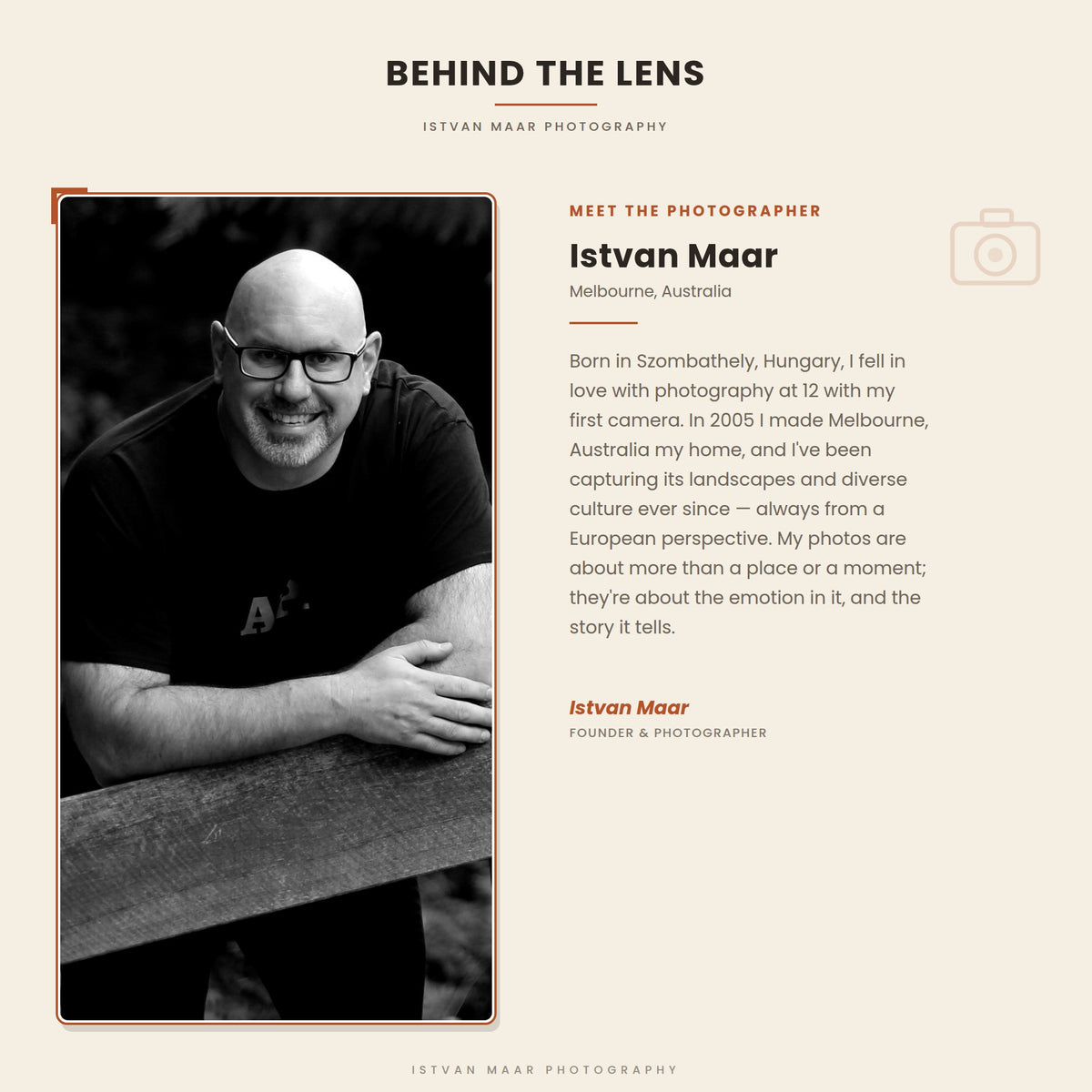
But sometimes a butterfly will choose you. They land on shoulders, hats, bright clothing — and, as I've discovered, the occasional bald head. If it happens, stand still and enjoy the moment. And if someone with you has a camera, that's a photo worth taking.
My Butterfly Calendar
After many visits, foggy lenses and a lot of patience, I've collected some of my favourite photos: delicate wings, bright colours and tiny details you'd never notice with the naked eye.
They've become a new calendar, the 2027 Personalised Australian Butterflies Wall Calendar: 12 months of colour to brighten any wall. It makes a lovely gift for nature lovers, gardeners and anyone who smiles when a butterfly drifts past.