Personalized Photo Calendars vs. Mass-Market Calendars: Why the Difference Matters for Your Gift
Share
Every December, calendars flood the shelves — big-box chains, supermarkets, discount stores. They're cheap, they're everywhere, and they almost all look the same: generic stock photography of somewhere that could be anywhere, printed by the truckload, with your name nowhere on them. At the other end of the spectrum are the "upload your own photos" calendar makers — the kind where you spend an evening dragging holiday snaps and birthday photos into a template. Between those two extremes sits a third option that a lot of people don't realize exists: a calendar that is genuinely personalized, but built around real, original photography rather than your own camera roll.
What "personalized" usually means — and what it's missing
For the mass-market calendar racks, personalization doesn't exist. You get whatever week-start convention, whatever language, and whatever selection of images the publisher chose for the widest possible audience. There is no version of that calendar with your recipient's name on the cover, no way to pick Monday-start over Sunday-start, and definitely no option to have it printed in Dutch, German, or another language that actually matters to the person receiving it.
The upload-your-own-photos calendars solve the personal part, but they hand the creative and technical work back to you. Phone photos vary wildly in resolution, colour balance, and composition — great for a phone screen, often disappointing once they're blown up to fill an A3 wall calendar page. You become the photographer, the editor, and the layout designer, usually the night before the order is due.
A third way: personalization built around real photography
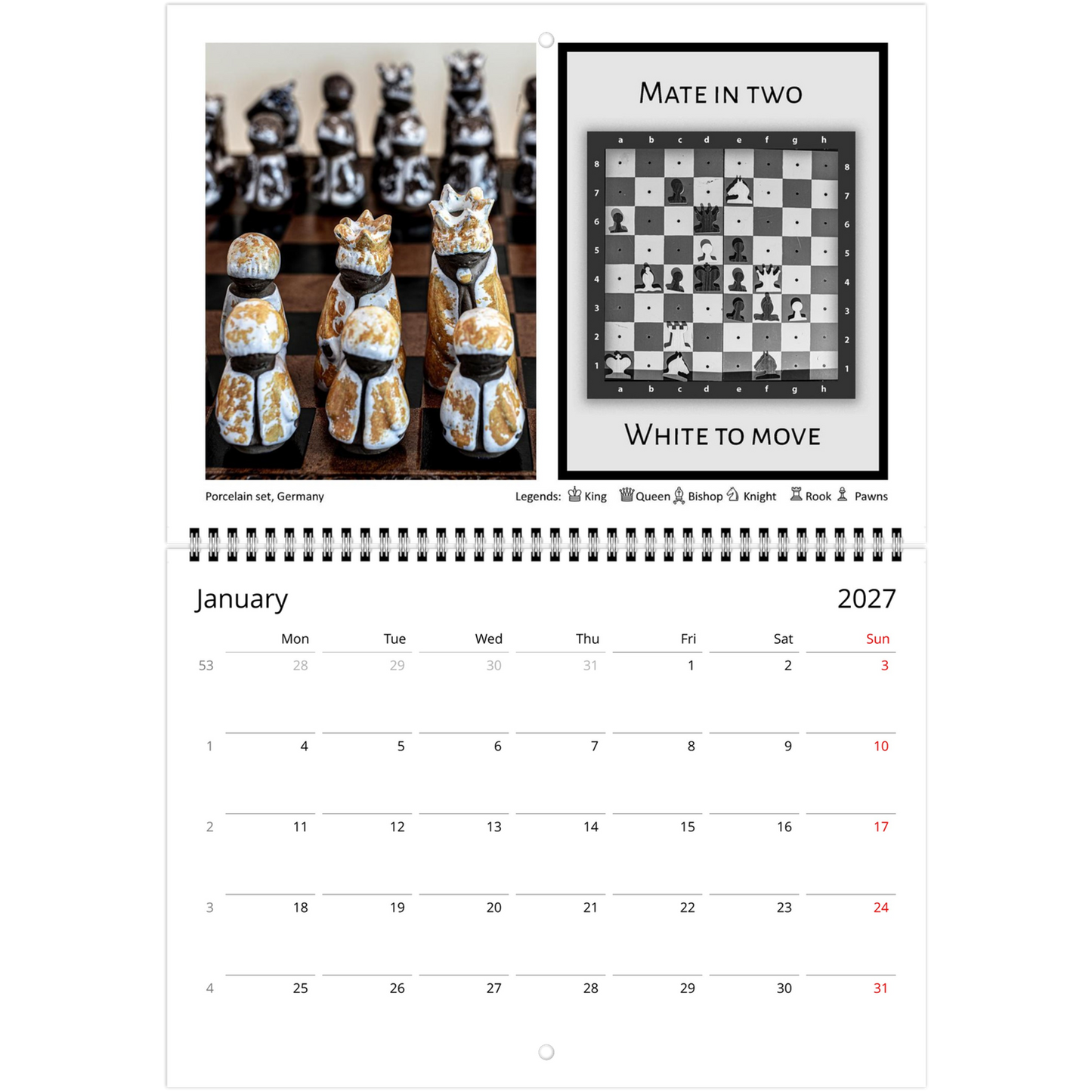
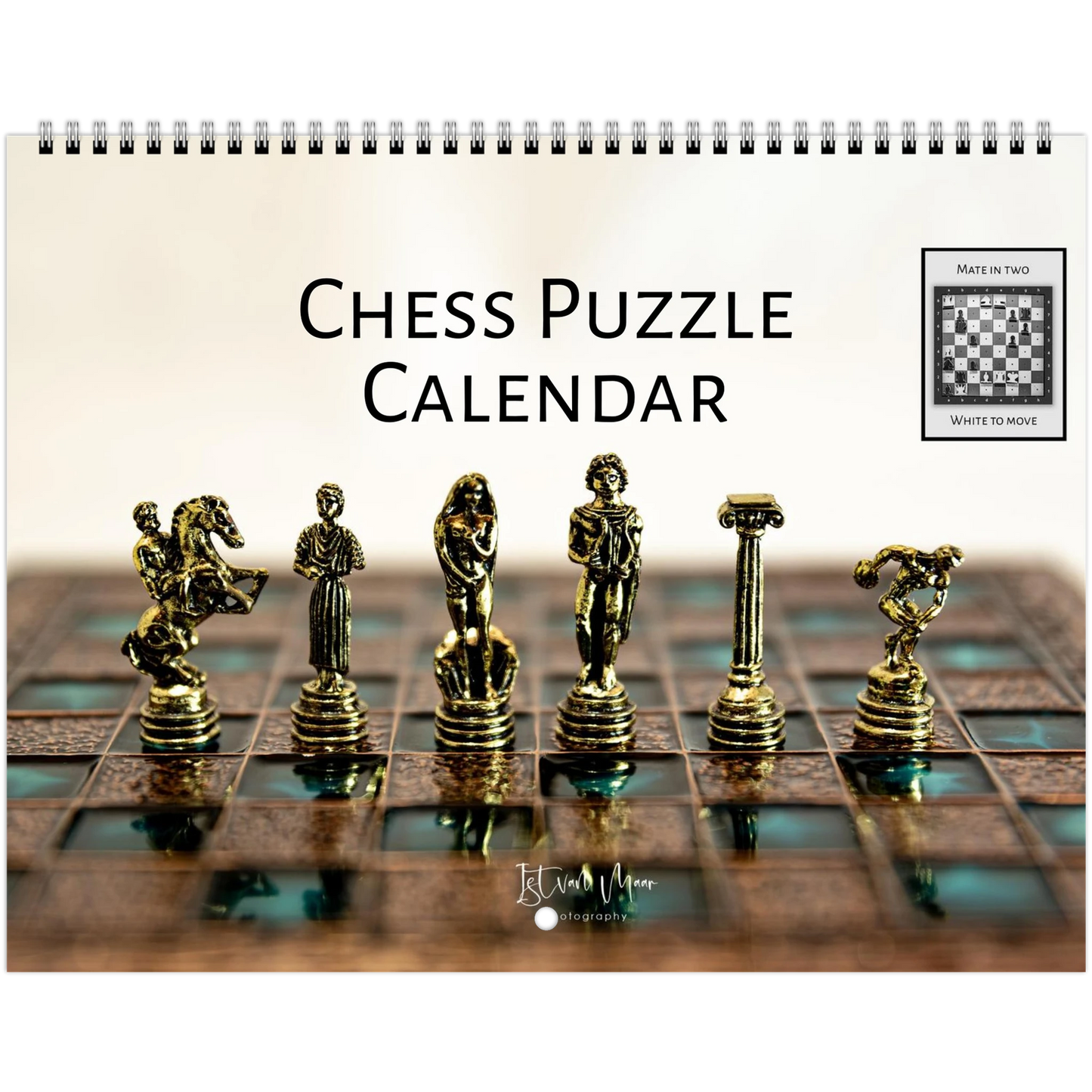
Istvan Maar Photography calendars start from a different premise. Every image is original photography — Australian landscapes, wildlife, European travel scenes, architecture, and the studio's well-loved chess puzzle series — shot, composed, and colour-graded by a working photographer rather than pulled from a stock library or a phone gallery. What gets personalized is everything around those images: the language of the months and day names (multilingual editions are a core part of the shop), whether the week starts on Monday or Sunday, the paper size and orientation, and increasingly, a printed name or short message for the person the calendar is going to.
That combination matters more than it sounds. You get the visual quality and consistency of a professionally shot, professionally printed product, without losing the personal touch that makes a gift feel chosen rather than grabbed off a shelf. Nobody has to trawl through their camera roll wondering which twelve photos are good enough to print at A3 size.
Why it matters for gift-giving
A calendar is one of the few gifts that stays on a wall or a desk for an entire year, seen every single day. That's exactly why the generic version feels like an afterthought and the personalized one feels considered. A multilingual chess calendar for a grandparent who still plays every weekend, an Australian landscape calendar in someone's native language for a relative overseas, an architecture calendar for the person who just moved into a new home — these are gifts that say something specific about the recipient, not just about the season.
Practically, that also means:
- No design work for the giver. The photography and layout are already done to a professional standard — you're choosing from a curated collection, not building one from scratch.
- Consistent print quality. Every page uses the same calibrated, high-resolution source images, so there's no page that looks noticeably worse than the rest — a common problem with mixed personal photos.
- Language and format options mass-market racks don't offer. Multilingual editions and different week-start conventions mean the calendar actually fits how the recipient lives, not just a generic default.
- A story behind the images. Each collection comes from real trips and real subjects, giving the gift a narrative worth mentioning when it's unwrapped.
The takeaway
"Personalized" shouldn't have to mean "do it yourself." A calendar can be tailored to the person receiving it — their language, their preferences, their taste — while still being built from photography good enough to hang on a wall for twelve months. That's the gap Istvan Maar Photography calendars are designed to fill: more considered than anything off a supermarket shelf, and better looking than anything assembled from a phone gallery the night before a birthday.