Before Sunrise at Monkey Mia: Stars, Sand and the Quiet Hour
Share
Monkey Mia, on the shores of Shark Bay in Western Australia, is best known for its wild dolphins that swim right up to the shallows each morning. But long before any of that happens, in the hour or two before sunrise, the beach itself becomes something completely different — quiet, dark, and, on a clear night, absolutely full of stars. That pre-dawn window is where I had one of my favourite photography experiences in the whole country.
Getting Ready Before the Sun Comes Up
Pre-dawn beach photography takes a different kind of preparation to a normal sunrise shoot. A few things I make sure of before I even leave for the beach:
- Arrive early, in the dark. Not just before sunrise, but well before — you want time to find your composition, set up, and settle in before the sky starts changing.
- Use a head torch, not a phone light. You need both hands free for setting up a tripod and adjusting camera controls in the dark, and a head torch with a red-light mode helps preserve your night vision without ruining long exposures if it flickers into frame.
- Check the tide and the moon phase. A low tide often exposes more of the sand and any interesting foreground elements like rock pools or reflections, and a moonless or low-moon night gives you the darkest, clearest sky for star photography.
- Dress for the cold. Even in Western Australia, pre-dawn beach air can be surprisingly cold, especially with any onshore breeze. Comfort matters when you're standing still for long stretches waiting for the light to shift.
Capturing the Stars and Milky Way Before Dawn
In the hour or so before the sky starts to lighten, a beach with no artificial light nearby — which Monkey Mia certainly has — gives you a genuinely dark sky to work with. For this, I typically use:
- A wide-angle lens (something in the 14–24mm range) with a wide maximum aperture, ideally f/2.8 or wider, to gather as much light as possible from the stars.
- A sturdy tripod, essential for any exposure long enough to capture starlight, especially with sand and any breeze off the water working against a stable shot.
- ISO in the 1600–6400 range, adjusted depending on how much noise your camera handles well, paired with a shutter speed around 15–25 seconds to avoid visible star trailing at wide focal lengths.
- Manual focus, set to infinity ahead of time, since autofocus generally won't lock onto anything in near-total darkness.
With the ocean as a foreground, you get the added bonus of the water reflecting whatever light is in the sky, and depending on how still the water is, you can sometimes catch a hint of the stars themselves mirrored in the wet sand at the waterline.
Transitioning Into Sunrise
As the sky starts to lighten, the shot changes completely, and so does the gear approach. I'll usually shift toward a slightly narrower aperture (f/8–f/11) as the light increases, keep the tripod in place, and start bracketing exposures to handle the growing contrast between the brightening sky and the still-dark foreground. A graduated neutral density filter can help balance that difference in-camera if you'd rather not blend exposures afterward.
This transition period — from full darkness, through the first hints of colour, to the sun actually breaking the horizon — is genuinely one of my favourite windows to shoot in. The sky and water change noticeably every few minutes, and no two frames from that stretch ever look quite the same.
Why It's Worth Getting Up That Early
Standing alone on a beach in the dark, waiting for the sky to slowly reveal itself, is one of those experiences that's hard to describe until you've done it. Monkey Mia gave me exactly that — stars fading into colour, the first light catching the water, and not another person in sight. It's a quiet kind of reward for setting an uncomfortable alarm.
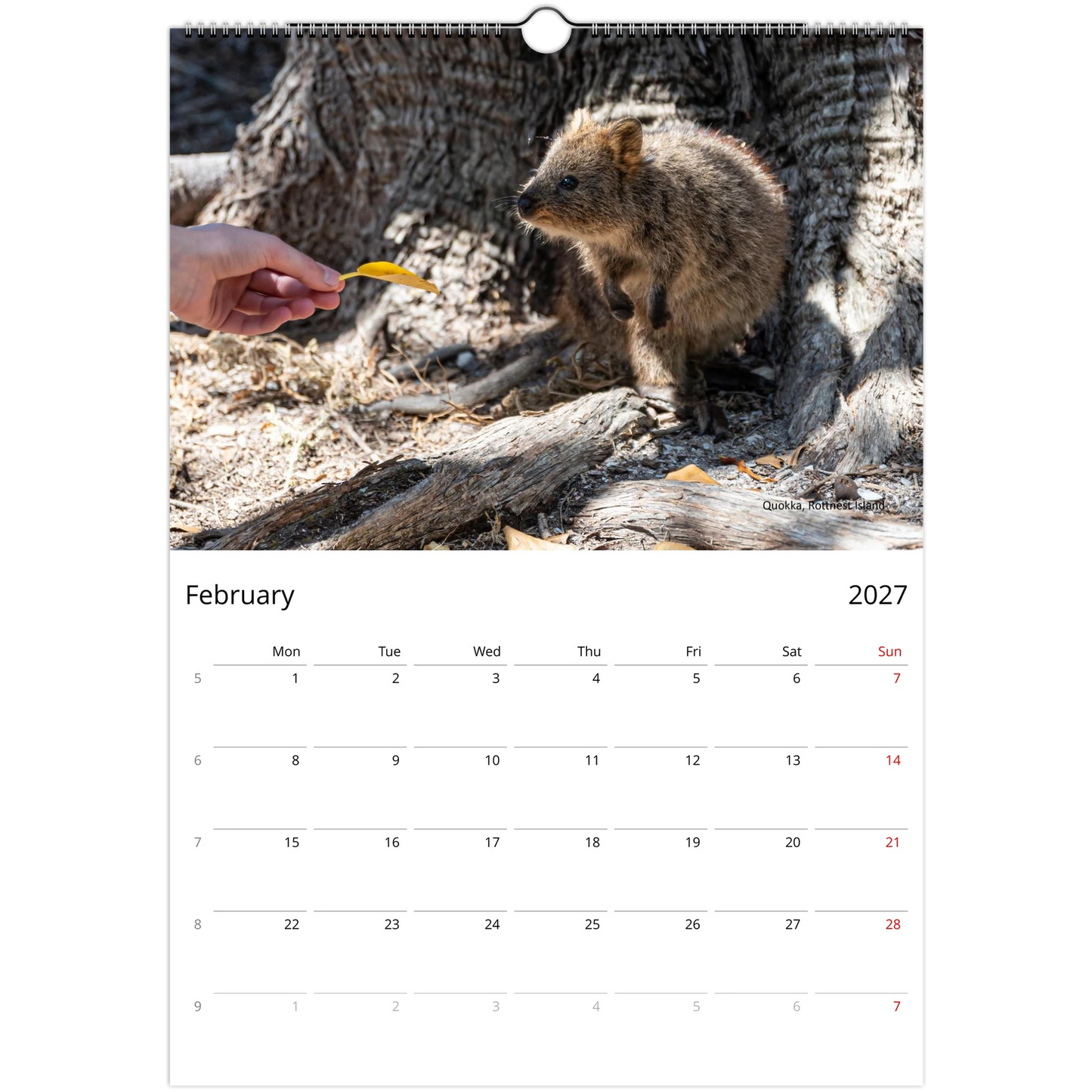
The Western Australia Wall Calendar
That pre-dawn morning at Monkey Mia is one of the images featured in the Western Australia Wall Calendar, available here. You'll find it among my travel calendars — a great way to relive a trip out west, or to give a year of Western Australia to someone who's never been.