Victoria's Lighthouses: History, Meaning, and Cape Schanck
Share
Victoria's coastline is one of the most treacherous stretches of water in the world, and its lighthouses are a direct, physical reminder of that history. Long before radar, GPS, or modern shipping technology, these towers were the only thing standing between a ship at night and a coastline that has claimed hundreds of vessels over the centuries.
Why They Were Built
Much of Victoria's coast, particularly around the notorious stretch known as the Shipwreck Coast, is lined with hidden reefs, sudden cliffs, and unpredictable weather that turned it into one of the deadliest shipping routes in the Southern Hemisphere during the 19th century. As maritime trade and immigration to the colony increased, so did the number of wrecks — and with them, the pressure to build reliable warning systems along the coast.
Lighthouses were the answer. Built at key headlands and dangerous points, they gave ships a fixed, visible reference point at night or in poor visibility, each with its own distinct light pattern so sailors could identify exactly where they were along the coast. Many of Victoria's lighthouses date back to the 1850s and 1860s, built from local stone and designed to withstand exactly the kind of harsh coastal weather they were built to warn against.
What Lighthouses Mean to People
Beyond their practical function, lighthouses have taken on a much bigger symbolic meaning over time. They represent guidance in darkness, safety after a difficult journey, a steady point that doesn't move while everything around it does. For coastal communities, they were often literally life-saving, and that history has left a deep emotional resonance that's outlasted the need for the lighthouses themselves in the GPS era.
I think that's part of why a photograph of a lighthouse resonates with so many people, even those with no direct connection to the sea. There's something universally comforting about a tower standing firm against a storm, quietly doing its job long after the ships it was built for have changed entirely.
Why People Choose a Lighthouse Calendar
A lighthouse calendar taps into that same feeling, month after month. It's not just a coastal landscape — it's a symbol of steadiness, resilience, and quiet reassurance, which makes it a popular choice as a gift for someone going through a transition, or simply for anyone who finds a sense of calm looking out at the coast. There's also the atmosphere that comes with the subject itself: dramatic skies, crashing waves, golden hour light on old stone — lighthouses tend to photograph beautifully in almost any weather, which keeps the images varied across twelve months.
Cape Schanck
One of my favourite lighthouses to photograph is at Cape Schanck, on the Mornington Peninsula. A boardwalk pathway leads out from the car park, winding down through coastal scrub before opening up to dramatic clifftop views, with the lighthouse itself standing at the point where the land meets the Bass Strait. It's a genuinely striking walk even before you reach the lighthouse, and the combination of rugged cliffs, ocean views, and the historic tower at the end makes it one of the most rewarding coastal photography locations in Victoria.
The Lighthouse Wall Calendar
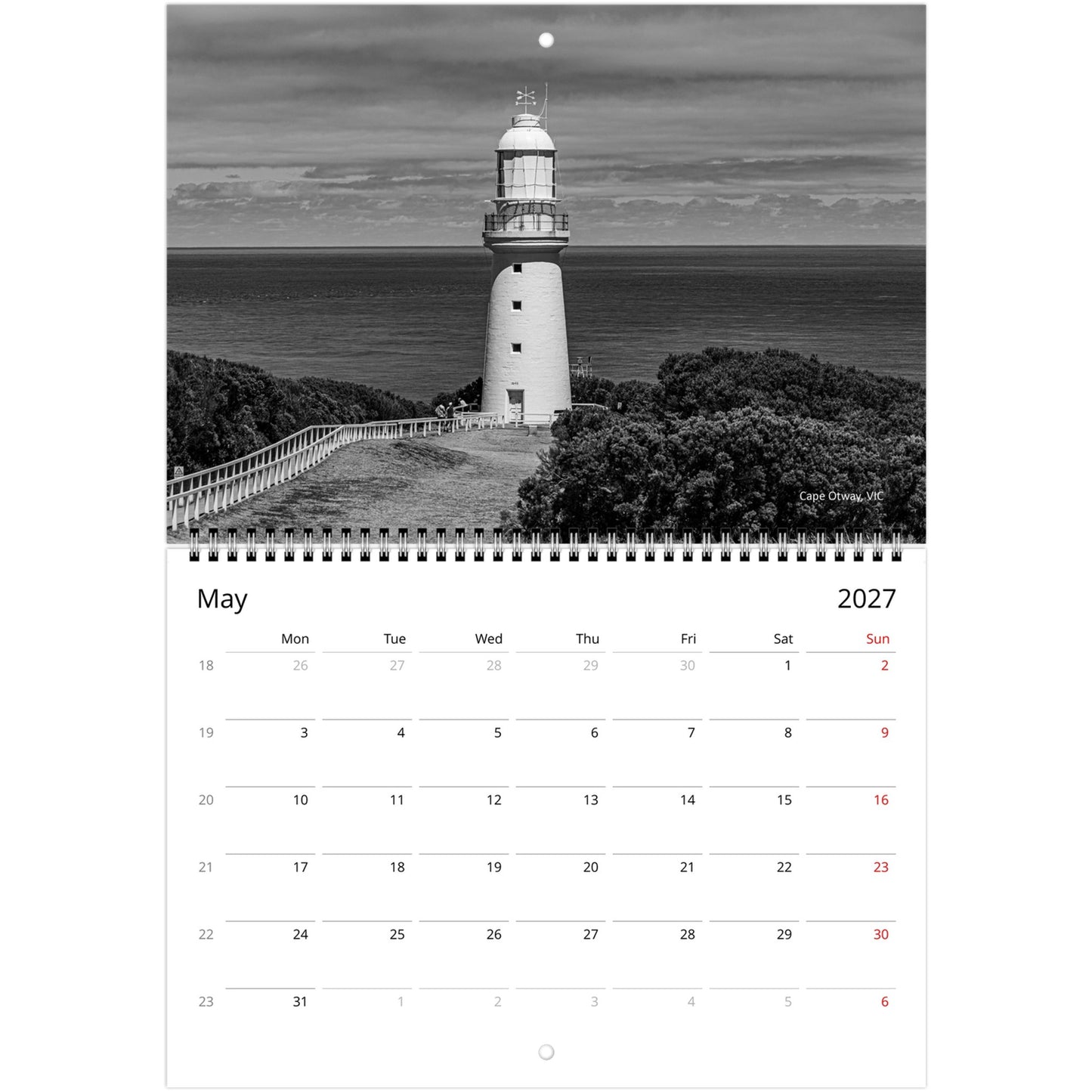
You can see Cape Schanck and other Victorian lighthouses in the Lighthouse Wall Calendar, available here. If Victoria's coast is on your travel list, take a look at my travel calendars too, including the Great Ocean Road Wall Calendar — the Shipwreck Coast's most famous drive.